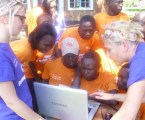
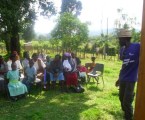
Day 3…….the community arrive

After a busy day yesterday in class we were due to meet the Cham gi Wadu community steering committee. We sent the transport to pick them up after breakfast, which gave us time to do a bit of admin work. Worryingly, I am still waiting on the University of Brighton Finance Department to authorise payments for the safari we aim to take at the end of field-trip. Students paid for this on the 10th January and 10 days later we are still waiting. I am assured that it will be authorised and passed for payment soon but it is worrying as I have much to organise at this end and our safari operator is in Nairobi 8 hours away. I am also waiting for the money my first year students collected for the Biwati Orphanage through Just Giving last year to be processed. As I am just about to meet the folk who run this orphanage it is a little embarrassing although much of the delay for this was caused by Rongo’s administrators…..nonetheless it is me who has to explain.

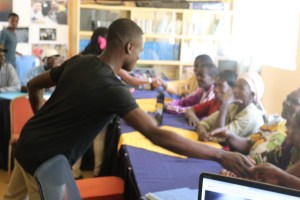
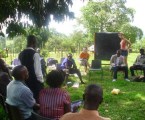
At 11am the 12 strong steering committee arrived and were so delighted to be with us again as I was with them. I recognised the delegates and even remembered the self-help groups they are from – so perhaps old age hasn’t caught me just yet! 😉 I quickly explained the delay in transferring the funds to Biwati to the 2 Janes (the drivers of this community group and responsible for the orphanage) – they were very understanding. After a series of brief round table introductions – community people and students are so much quicker at this than academics – and my rather clumsy attempt at greeting and welcoming them to the session in the Luo language (which they appreciated) it was down to business. Knowing they had recently had a community meeting to discuss the project I invited them to give us a report from the meeting.
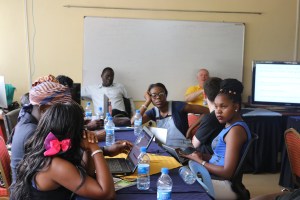
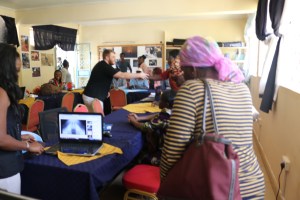
This report gave us both food for thought as a collaborative partnership and great joy. It was stated that in their outreach work among the community groups there was enormous support for the idea of building a community radio station. The obvious benefits for improving community communications such a radio station could bring through knowledge sharing and access to relevant and contextualised information across many areas of community life has been readily understood it seems. However, it was said that there was some concerns, perhaps impatience is a better word, about the time it was taking to be implemented. In response to this last point I explained (again) that there are many stages to go through before the community was fully mobilised to build and operate a sustainable community radio station. I also explained (again) that we are neither a charity nor an NGO with ready streams of funding. That all monies raised towards this initiative were raised by student fundraising efforts; the support of colleagues at the University of Brighton and the friends and families of participating students. I suggested that the time it takes us to raise the 3 million Kenyan Shillings (£20K) to build a solar powered radio station would provide time for the essential community outreach and mobilisation activities to ensure both community engagement and commence capacity building and training activities.

This honest and open exchange of views was clearly appreciated and my message was understood by the steering committee. Of course, it is less challenging to simply raise funds, parachute a radio station into the community and let it fend for itself but in my community communication experience (circa 35 years as a practitioner and 25 as an academic) such initiatives are usually doomed to fail (my PhD thesis is available upon request ha ha ha). At this point we moved on to discuss our activities for the next 2 weeks. Last year we undertook a needs analysis of various subsistence self-help groups (the video is available at https://www.youtube.com/watch?v=BmXjcVkmsCk). This year we plan to conduct a community communications asset mapping exercise. From both research exercises it is hoped that a strategic action plan will begin to emerge.

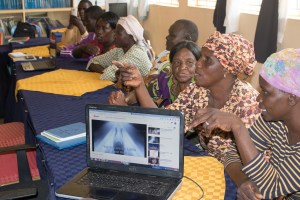
The rest of the morning was spent in a brief introduction to community asset mapping and how we would go about this. Organising them into breakout groups for a participatory learning workshop (PLW) participants were asked to reflect critically on their understanding of mapping and the geography of community before considering how communities communicate with one another in Kenya and what community radio’s role might be in this. A fascinating discussion in the groups ensued, which I tried to facilitate going from group to group before some really interesting points were raised back in plenary. I had students taking notes of all these sessions and it is my intention to write these up as co-author/co-created papers/presentations at a later date.

After lunch, the afternoon, which was to be a brief session, ran into a few technical problems – not uncommon in community technology projects. I had asked Rongo to test the geo-coding functions on their phones prior to our arrival but somehow this slipped between the cracks. So when we got to this point it turned out that the community only had one smart phone (without a battery) and the UK party had a range of technical problems (mine being O2 telling me my android was unlocked when it wasn’t). This left the Rongo students, all of whom had android smart phone but which appeared to interact with google maps in ways different to ours. Although this caused me a few problems, I knew I had purchased a mobile modem for fieldwork, so despite a little embarrassment I wasn’t really phased and moved on to show and explain the draft community asset map I had produced using data we collected last year and Skype conferences since then. This done, we decided upon a plan of action for next week and called the session to a close. The community went away excited at the prospect of the forthcoming collaborations and for our students the day had brought an element of reality to their CM4K experiences.

The weekend will be spent in a more relaxing mode and I’ll write about that later.

Skward day out to Rusinga Island

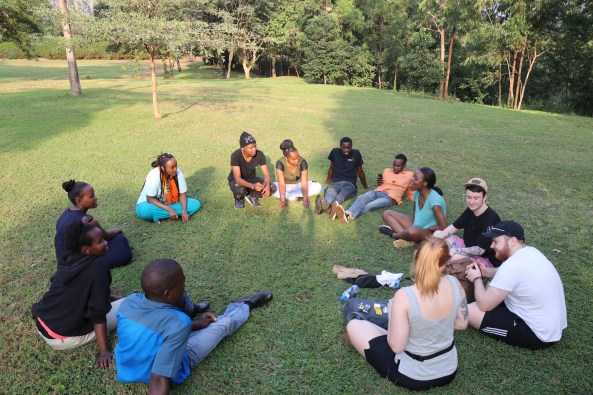
On the weekends we have those days to ourselves and to do whatever activity we would like. On Saturday along with the students from the University of Rongo decided to visit Rusinga Island, to see Lake Victoria. The drive was roughly 3 hours and during that ride it was the first time for all of us students to be in the same vehicle and we got to know each other more. The ride was exciting for all of us as we filled the bus with chatter and singing, many of us read books and listened to music and several took naps.

When we arrived to Rusinga Island we had to drive down a very bumpy road which was full of uneven level of roads and surrounded by stones. This road brought a lot of humour to us as the bus would throw us into the air and the bus would be filled with screams and we’d claim we were on a rollercoaster. The people in this area were very welcoming and as we drove past many of the children would stop and wave at us with so much excitement from seeing new visitors.

When we reached Rusinga Island Lodge was very shocked by how much the area stuck out like sore thumb compared to all the areas we had just driven by which was poor with many mud houses and fields and surrounded by animals such as cows, goats, chickens and donkeys. The Island looked like something out of a movie with beautiful architecture looking like I was taken away from Kenya and to Thailand. All the buildings were made of wood and they all had these big amazing thatched roofs, with amazing decor. Walking through the reception to the other side your eyes were met with the most beautiful view of Lake Victoria, and a wooden pier stretching across the lake and at the end of that pier were my fellow peers. On the edge of the seafront were several palm trees which I believe were coconut trees.

Walking along the shaky planks of the pier to reach my peers was nerve racking, as I’m terrified of piers especially the ones with shaky planks. Everyone on the other end I realised half way was watching me, as I was walking alone and funny trying to avoid as many unsafe planks, but when I reached the end of the pier I explained I was scared and I do this on Brighton pier also. It was an amusement to them all but me. Whilst there we were all excited to take group pictures, and pictures of each other, even our security guard was more than happy to have photos taken of him and with him. Once this excitement was over we walked off the pier and some of us lounged in the shade and others in the sun. I was seated on a big rock which had several big pillows in top and whilst sat there me and some of the other students played with Wendy’s baby; Jordy and talked the difference between London and Africa, the medical health we went through to be able to travel safely to Kenya. This conversation was hilarious to the Kenyan’s regarding the injections we had to go get and they were slightly offended Westerners believed Africa is a bad infested place.

It was nice sitting in the sun and taking in the breeze and getting to know each other more and what we do in our free times away from university. Moments later we were arranging for ourselves, including Andres and Isabelle’s first born daughter, Zerah, who i claimed that day as my sister and I spent the rest of the day calling her sister. She became the best sister for me that day as she was able to order me chips, I really needed a sister who understands my love for food.

Preparing to go on the boat ride was scary for me because I have a big fear of boats, and the driver of the boat and Sam held my hand as I screamed and staggered onto the boat, which even though it was beside the pier and tied up, it moved an awful lot and it had my knees shaking. Once on the boat we were properly introduced to our driver and life jackets were put on. We were all quick to get Zerah in one as we feared for her as she was so brave to sit right at the front of the boat. Of course, a life jacket was given to me which I hasty put on as I saw how far away we had already drifted from the pier and land. I spent the boat ride seated and praying to make it back to land, but besides that the boat ride was fun. At one point the driver asked me and Katie if he could speed up the boat more and were like of course but braced ourselves. Lol. All was good until the driver began to chill during the ride and let go of the steering wheel and turned to smile at me and Katie and ask if we were doing okay, we were to reply yes but shouted “KEEP YOUR HANDS ON THE WHEEL!”. He laughed his head off at us.

During the boat we drove by many people on the other side of the island, many Kenyans swimming with their families and some bathing which was funny as they were fully naked and was a shock for us. We saw some boats floating in the see which I got amazing pictures of. The whole boat ride was amazing and many of the brave ones like Sam, Hafsah and Luca were stood at the front of the boat like a bunch of macho men braving the waves and the splash back of the water.

We spent a few more hours out at Rusinga Island drinking fanta and eating chips, before heading back on the coach back onto the bumpy roads and many of us, like myself falling asleep on the journey back to the university for dinner.

The worst shower + Rusinga Island

Last night may possibly have been the worst shower that I have ever had. As per usual, I used Hafsah’s shower as my water doesn’t work and hers has very good pressure. However, yesterday the pressure seemed a bit weak, that should have been my first clue! I began showering anyway and the water carried on flowing. I turned the tap off whilst I shampooed, but when I turned it back on, no water came out – just my luck! I grabbed my towel and asked everyone outside if their water was working – it wasn’t. 10 minutes of panic went by and finally, Angel came out saying her water worked, so I jumped into her shower and water the shampoo out.


Today was our first ‘rest’ day, being Saturday and all. The alarm was still set at 8am though, as we had to get up, have breakfast and head off to Rusinga Island. The bus journey lasted around 2 hours, but it seemed to take an age. However, it was all worth it to return to the beauty of Lake Victoria. After taking photos with the Rongo students at the end of the pier a boat ride was organised for us. Whilst we were waiting for the boat to arrive, we stood around on the beach looking for shells and skimming stones. The boat journey was amazing! As it could hold 7 and there were only 5 of us, we asked Andres and Zerah if they would like to join, they were delighted! The trip was short, but it was such an incredible experience. Last year I spent the whole ride filming the others, so it was great to focus on experiencing Lake Victoria’s amazing coastline.


After our boat ride, Luca and Katie decided to go for a swim in the lake, I thought twice about it before deciding to stay on the side and take a few pictures for them. In hindsight, whilst sitting in the heat writing my blog, I wish I had joined them. I also saw a little Ingrid in the trees and got a great photo of it. We then bought a Tusker and waited for the Rongo students to finish their boat ride before jumping back on the bus and heading off home. Once again, the bus journey seemed to take forever. Thankfully I managed to fall asleep for a while, however, this was much to the amusement to the others as the bumpy road made me ‘ragdoll’ around.


It was great to finally get back to the university and be greeted by a fantastic dinner of meatballs!


Sam 🙂

Day 4- Community Information, Communication Asset Mapping for Community Radio and Cham gi Wadu

Friday arrived really quickly but I forgot it took a day to get here lol, my first week in Kenya has flown by and just as I’m getting accustomed to everything we only have 2 weeks left and I could stay here longer. Waking up this morning was a struggle as I’m always hit with the fear of what insect I could find crawling in my bathroom wall or bedroom floor and will I survive the day with all the creepy insects around me. In addition I woke up with a banging headache from the night before, where I discovered I can’t handle Kenyan apple cider, with a 4.5% alcohol. Pathetic. Disgraceful.

Carrying my headache into the heat we were driven to breakfast one of our many routines, where I was delighted to see boiled eggs was on the menu. After breakfast me and the others sat on the grass as we soaked up the sun and nursed our full stomachs of sausage, eggs and plantain.

Today we met several of the Kenyan’s from Cham gi Wadu, the community we are researching about and planning to map a community radio station for. They’re a lovely bunch of people to meet who have a big care for their community and wish for it to thrive.

Along with the Kenyans and the community of Cham gi Wadu we listened to a talk given by Peter on community information, communication asset mapping for community radio and Cham gi Wadu. We started the class by watching the CM4K documentary of last years students, based on their visit to Cham gi Wadu and their visit to all the different communities which do many of the few things, such as brick making, fishing etc. Within this video, many of the students talked about their process of their study whilst in the communities and what they wish to do for the community.

As the class progressed we were split up to work with the group from Cham gi Wadu and with the Kenyan students whilst gathering research on all the communities and the best way to help them through the radio station. Example, the fishing community want to receive fresh water like the water community in order to allow their fishes to survive longer using the radio station they can communicate with the fresh water community on how they received fresh water and to use their knowledge to develop their own fresh water and allow their fishes to survive longer.

Working with the community opened my mind into what we are expected to do whilst in Kenya and seeing the passion and love they have for their community, makes me want to use all my research and mapping skills I have and will learn throughout this trip to give the community a radio station.

We were back in our groups and with the community we were given 4 questions to discuss with the community; What does geography mean for you in Kenya? What are maps and how can we use them to plan and operate a Community Radio Station? What are the community assets? How do communities communicate with each other? These questions were difficult to answer but with the community we were able to come to many conclusions for them all and open our mind on the mapping we were supposed to do of the area after lunch as a group, which were to then be placed on Google Maps.

At around  2pm we took a well deserved lunch break of chicken, fish, rice, cabbage and for desert fruit I can only wish I could afford back in England. I never turn down a plateful of fruit here as I’m getting my 5 a-day and the cooks take good care on me by always giving me fruit on a separate plate due to my allergy. As usual I ate more than my stomach could carry and I could only blame myself as I carried it across the field to sit in the sun and have a good laugh with the other students.

Due to a lack of mobile phones working, we were unable to go outside and begin our mapping for the community. Instead we finished our presentation and got to discuss our day with the other students.

I have a high anticipation for tomorrow as it being Saturday we are travelling to Rusinga Island to visit Lake Victoria and hopefully see some hippos. AYYY!!!


19/01/2018: Meeting the Community for the first time!!

Once again, I am going to start this blog by talking about my evening yesterday. After dinner, we went home via the Treat House Hotel to pick up some beers. They were only 200 shillings a bottle (£1.40), a right bargain! Luca showed us all up by buying a couple of beers for our driver, Bituk – so I will have to find a way to one-up him in the future! Once we got home, I showered and changed before tucking in to a nice cold bottle of Tusker – delicious! Unfortunately, it was still warm out so the rest of the beers were not as refreshing, but they still hit the spot.

This morning I woke at 8am, my head thankfully feeling okay. I washed and dressed before reading my book The Social Contract (Jean-Jacques Rousseau). I was interrupted by Luca crashing out of his room and, very gracefully I must say, falling over. Thankfully he is okay! We left for the university at 8:45am and was greeted, as per usual, with a delicious breakfast. Afterwards, I followed the other guys as they tried feeding the dogs (Ludo and Mama) some mandazi, but ultimately the dogs were too scared.

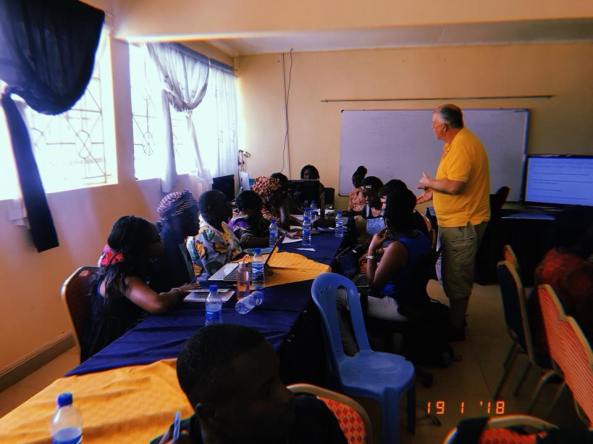
Our lecture started at 10am today and I was reintroduced to the members of the community. I took some pictures whilst Peter was giving an introductory lecture, it proved to be difficult as the windows to the side of the room backlit almost every single picture. We were then split back into our groups from yesterday, we were joined by four of the community members, the rest split off into the other groups. We discussed four questions with the community groups:

  • What does geography mean to you?
  • What are maps and how can we use them to plan and operate a community radio station?
  • What are community assets?
  • How do communities communicate with each other?

We learnt some very important information during this exercise, most notably that the communities have weekly meetings with each other to discuss their problems, the chiefs then relayed this information to the government, who provide the solutions. I also learnt how they use schools and churches to distribute the information in their communities.

I found the communication between myself and the community members quite challenging as they spoke Swahili and I, obviously, do not! Thankfully, Halima and Mercie translated for me and explained everything the community members were talking about.

After lunch, we unfortunately had technical issues with the geo-mapping on Google maps. Therefore, the lecture was cut short and the community members left. Eve asked me to help teach her some basics on Adobe Premiere Pro, so I sat down with her for an hour and showed her how to cut using the in/out method.

I’m finishing this blog as we wait for dinner and after completion, we are going to head down to the little shop on campus to buy a drink.


Sam 🙂


P(oo).S. My bowel is still happy and in full working order.

Week 1- Friday

Waking up today was a bit difficult as I was extra tired as we stayed up the night before chatting and having a few beers & ciders. Once we were all ready we headed to the university for another amazing fully packed with energy breakfast. We had some time to kill after breakfast so we tried to feed the dogs, Ludo and Mama before a few of us sat in the shade and the others sat in the sun for a quick tan before lecture. While outside we had a friendly visit from a butterfly (later named by Katie as Florence) which took a rest on Luca’s back and posed for our photos allowing us to get close enough to see its beautiful wings.

The Cham gi Wadu community arrived around quarter past eleven so we waited on the rest of the Kenyan students before getting up and greeting the community members. We then went around in a circle introducing ourselves. We started from the community and ended with Peter. Once greetings were out of the way we watched the video that Sam produced the year before as part of his placement module. This was the second time some of us watched it, including myself and I enjoyed it as equally as I did the first time. I find the video extremely informative, well filmed, and edited. The video showed the dedication and team work between the Cham gi Wadu community and the students of CM4K.

Once everyone got the chance to see the video Peter began the lecture by putting us in the same groups as the day before and adding 3-4 community members to each group. The group I was in consisted of 4 Cham gi Wadu community members, and 7 students. We were asked to discuss four questions: What does geography mean to the project? How can we use maps to plan and operate a community media station? What are the community assets? And last but not least, how will the radio station improve communication between the communities? As a group, we also discussed the relevance of the community radio station shows and what would have interest to the local communities. For example, we would have radio shows based around fishing and how to fish as well as how to keep your fish alive instead of a sports show as this would benefit the radio stations listeners more. Peter also went around visiting the groups. When he reached our group, he emphasized the relevance of community mapping as well as its important elements. These were: the local people and how they educated, lived and ensured survival. A new form of geography called – neo geography. After our group discussion, each group shared and reflected on what they discussed. This allowed us to hear the different perspectives and points from each group. After this we broke for lunch.

This time the Kenyan students where on time, some even early. This allowed us to start the next part of the lecture early, although that did not happen. We were meant to go out and practice mapping with the community as not everyone including the students knew how to do it. But we did not get the chance to do this as the smart phones that were available did not work. So, Peter then decided to explain it using his laptop that did work. He showed us examples that he had already done and what he expects it to look like after we have uploaded all the locations. Once this was over Peter decided to end the lecture for the day. We said our goodbyes and began our lengthy blogs as a group once again.

P(oo).S. My bowel movements are still regular and I have yet to accept any remedies.

19.01.2018 – Luca

This morning we were being picked up at 8:45am again, I set my alarms nice and early (early for a student that is) and started to get ready. I was quite tired, and me being me I managed to fall over (in style) on my way out of my bedroom, whoops – at least it was comical for everyone who saw. It was very funny and I now have a little scrape that is now a nice memorabilia, haha. After that, on the way to the mini-bus I saw a Praying Mantis! I adore all of the wildlife out here, so it made me really happy to see such a beautiful little insect. I really wanted to pick it up… But I managed to resist the urge somehow! Just look at this precious little face:

26239875_306644093189776_4038032126351387806_n

After we hopped on the famous mini-bus, arrived at the university and ate some (amazing) breakfast we spent some time relaxing in the sunshine whilst waiting for members of the Cham gi Wadu community to arrive. Once they arrived, the CM4K team each took a moment to greet and introduce ourselves. It’s so nice to meet the community that we’ll be working so closely with during our time here. After introductions, we then had an informal discussion where the community updated us on progression from their end, and Peter then answered questions relating to this. After the discussion, we then had a question and answer session within our groups which really racked our brains! Despite the challenge, we all received a diversity of answers and all learnt a lot – it was brilliant to hear first-hand responses and it was a very insightful exercise. We had originally planned that after lunch, we’d go out in our groups and practice geo-mapping in preparation for the real thing next week, but unfortunately, we could not get an internet connection and without it, made the task impossible as internet is required. Nevertheless, it was a good reminder that just because things do not always go to plan, we can work together and face these challenges. We plan to retry on Monday after having the weekend to discuss and plan a solution, please keep all of your fingers and toes crossed for us! Here’s a little snap of my group:

26991697_2023478927668270_9112840767841907249_n

I hope you all have a wonderful weekend, and we’ll catch you next week.

– Luca

P(oo).s. Movements are all normal, if not better from all of the healthy food we’ve been eating. 😉

Day 4

We got some beers on the way home last night which we awesome. We picked them up from the treetop hotel I think its called. Tusker is the local beer, its about 4.2% and tastes similar to Budweiser beer back home. We hung out in the courtyard just chatting and smoking. Sam’s our official bottle opener as he has a neat trick with opening the bottles with a lighter. I went to bed at about 10:30, getting up at 8am and being out in the sun all day has got me into a really good sleeping pattern! Better than the 3am bedtimes I’m used to after work. Also, my shower finally works! Turns out I hadn’t flicked the switch that turns on the hot water lol although I don’t mind having a bucket and flannel shower. I remember them from when I was in Ghana and enjoyed showering like that but it’s useless when I need to wash my hair.

The bus came for us again at 8:45 and took us to have breakfast at the university. I have got into a routine of having a hot chocolate made from Milo (Nestle) and Weetabix with hot milk and a banana. I’m never too sure what has meat in it so its safer for me to stick to what I know. The food here is amazing though I’ve eaten so well the past few days.

After breakfast we had an hour to hang out so we went to feed the stray dogs. We have two favourites a female we’ve called Mama and a male we’ve named Ludo. We then went up to the classroom at 11:30 to start the work for today.

Today is all about meeting the community and starting our work on asset mapping. We started by doing introductions 11 Cham gi Wadu community members. Isobel, Irene, University of Rongo Students and University of Brighton Students and Peter. Peter explained that we are working towards the project and that we are not a charity and NGO so it will take its time. He has costed up everything and for the equipment and solar panels which is going to cost £20,000 and 3 million Kenyan shillings. Andreas has sent up crowdfunding page for the project, the concept of crowdfunding was explained to the community. Isobel is sourcing Luo artefacts to gift as thank you for big donations. Everything is underway the two things holding it back is money and the short time were here due to distance.

Peter then explained the layout of today which starts with watching the video produced by Sam last year, then a lecture by Peter then lunchtime then in the afternoon we will do mapping exercises. He then talked through the process of mapping, including what it is and how it works with the end of the day resulting in an understanding between how it is important to have CBPR and community radio. I made notes on today that I will upload to the discussion board as its all a bit heavy for the blog. I enjoyed the discussion that they had around these ideas. It was so lovely to see the community members with their notebooks making notes about what we were saying and asking us to explain things that they didn’t understand.

At 2pm we then went for lunch. When we came back we were expecting to have a practical of asset mapping however it didn’t go to plan. The mapping didn’t work on the Rongo student’s smart phones so it was called off. Internet isn’t the best here so often it is pretty hit and miss to if things will work but hopefully we won’t have this problem when we go to do our fieldwork.

Were going to stay at the university and wait for dinner. It gives us some time to work on our blogs but also for me to connect to the Wi-Fi and check my Facebook and Instagram, finally! And my emails too as I have over 40 waiting for me on my phone since Monday.

Finally, we have decided to keep everyone updated on our bowel movements because its about 90% of what we talk about at the moment haha so,

P(oo).S I’m still fine for now, touch wood, although the lentils are deffo starting to have effect

IMG_1459

Week 1- Thursday

We left for breakfast at the university a little after 9. After breakfast, we started our first lecture: Community Radios in an African context. During this lecture Peter split us up into groups of 3, dividing us 5 Brighton students into groups of 2 and 1 mixed with the Kenyan students. Peter then highlighted a very interesting point as we were dividing. He said; “There will no longer be any Brighton University students or Rongo University students, there will only be CM4K – a partnership”.

In our groups, we discussed the meaning of community media and why it was important. As a group, we pitched in our individual understanding of the project and what it meant to us. We then asked the Kenyan students who took part last year about what their experiences with the field work was like and what the community originally brought up that was an issue for them. We also spoke about the radio station radius/footprint, its investments and how to increase those investments. I mentioned to the group the idea of the 10% saving method that I learnt from a Rabbi that I once met.

After this we took a 10-minute break which was misunderstood by the Kenyan students as an hour break. This brought on a lot of banter about Kenyan timing as well as our experiences of friends from home who runs on their own time and the phrase black-man-timing (BMT). During this break, Luca also had a mini photoshoot with his two fan girls. I was very tempted to start talking marriage gifts with them, I thought 4 cows, 2 goats and 6 chickens was a good deal.

After the break, we continued our discussion of investments by talking about steak holders and partners. In our groups, we discussed who the right people would be to have invest on the project and how we can make sure their voices don’t over power the communities’ voices. We were then given an hour lunch break as the cooks had brought us another amazing meal. Let me not get into how good the food is.

Again, us Brighton students got back on time whereas our fellow partner students got back between 30 minutes to an hour later. Once we were all back and seated we moved on to the next lecture: Community based participatory research approach for community media. For this lecture, we looked at what a community based participatory research is by sharing our understanding of the difference between methodology and methods. We discussed this further by linking it to our individual dissertations. The lecture was then concluded by looking into the definition of community profile and linked a quote by Hawtin, Hughes & Percy-Smith, 1994 – to our definition of community project. After our lecture as a partnership group, we sat in the room and typed up our blog entries with a few distractions of course.

Kassim, one of the Kenyan students mentioned the fact that I was not feeling well throughout the day and offered me a herbal mix that you drink with hot water. At first it sounded like something I’d like…he sold the remedy so well until he ended it with “but you cannot eat the whole day” which at first, I was like “I could do with a food break” as I felt slightly over fed. Then he said, “and you must sit by a toilet as it will give you diarrhoea”. This instantly put me off! Faster than anything as me and the others were itching to see who the first victim of diarrhoea would be, and I did not want to be the first…

P.S. My bowel movements are still regular without the help of Kassim.

Day 2…..and so to work

Today was probably the toughest day we will encounter during our time here. We have a tight schedule but I needed to get the students into the correct headspace and there was a lot to do. One of the drawback of working in this lovely land is the heat in a classroom. No matter how enthusiastic they started off and they did the heat was going to make them tired. Especially as we had much ground to cover before the community come in for our first meeting tomorrow.

The morning session was actually the killer for the students. During my lectures I always like to get the students into breakout groups to discuss certain points we’re covering and report back. This morning’s session focussed on Community Radio in an African context. This is based on the work of Abdou Sarr “Community Radios – Tools to promote peace, culture, democracy and development in Africa” which tells stories and shares experiences of various community radio initiatives across the continent. Whilst here in September I had gotten the media Studies Diploma students to review the text by section and took notes (compared to my reading of said text) of their presentations and their reflections on the arguments and issues raised by Sarr. Subsequently I knocked it into shape for a presentation but as I hadn’t used it I had no idea whether it would work or how long it would take. Well it worked well enough and generated some really interesting discussions among the students when they reported back from their breakout sessions. The problem was it all led to a very long session for the 12 Rongo and 5 Brighton students (as well as me).

One of the points I made to them before we started was that for the next 2 weeks there are no Brighton or Rongo students – there are only CM4K students who are co-investigators with our community partners. The ice breaking games the day before had got them communicating socially. This session was intended to get them communicating intellectually.

The much shorter afternoon session was designed to introduce them to community-based participatory research as a methodological approach and how community research is linked to community media practice through inquiry, discovery, knowledge sharing and dialogue. All attributes of community-based and community learning. Although a shorter session than the morning lecture it tied together CM4K’s approach; jogged a few memories among students from both institutions and prepared them for tomorrow’s session with the community when we employ CM4K’s PEARLS approach (Partnership Education: Action Research & Learning Scenarios) and introduce the concept of community communications asset mapping.

After dinner, we visited the Treat House Hotel where I sometimes stay to buy a few cold beers (we earned them today). I was greeted like a long lost friend by the staff which was very heart warming. We then spent a pleasant evening sitting in our little social area (a sort of folly – I’m sure there’s a proper word for it but my brain has switched off) which is encircled by the rooms of the Pastoral Centre. It was my first chance to socialise with the students since we arrived and the chatter and humour was very relaxing.